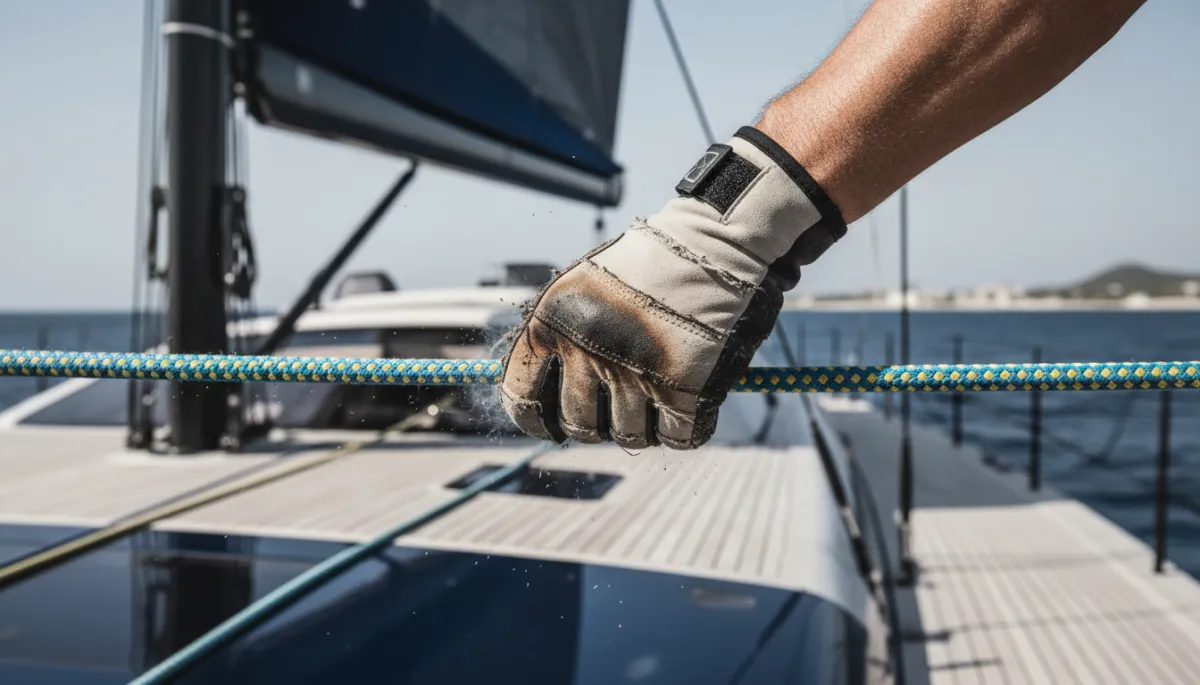
Preventing Rope Burns in Superyacht Racing
Superyachts, Medical Safety, Rope Burns
Rope Burns — More Than Meets the Eye in Superyacht Racing
On a modern superyacht, a split-second slip on a loaded sheet can turn an ordinary rope burn into a serious medical problem. Understanding why these injuries matter — and how to treat them correctly — is essential for every race crew.
Why Rope Burns on Superyachts Are Medically Different
Rope burns are a type of friction burn: heat is generated as a line runs rapidly across the skin, effectively “sanding” and burning the tissue at the same time. In superyacht racing, the combination of high loads, speed, and high‑performance fibres means these burns are often deeper and more contaminated than they first appear.
Medically, friction burns can behave like both an abrasion and a thermal burn. They may involve:
Loss of the top skin layer, leaving a raw, bleeding surface
Blistering where deeper layers are damaged
Embedded dirt, salt crystals, rope fibres, or deck grit
On hands, even relatively small burns can temporarily reduce grip strength, fine motor control, and the ability to handle lines safely — a genuine performance and safety issue for any racing programme.
The Hidden Danger of Dyneema, Kevlar and Other High‑Performance Fibres
Modern superyachts rely on ultra‑strong fibres such as Dyneema and Kevlar for halyards, sheets, and control lines. These materials barely stretch and are engineered to carry enormous loads with minimal diameter. That same efficiency makes friction burns more severe:
Higher surface speed: Low stretch means the line accelerates across the skin instead of absorbing energy.
More heat in less time: High friction can rapidly generate enough heat to cause partial‑thickness burns.
Fine fibres: Small strands and rope “fluff” may be driven into the wound, complicating cleaning and healing.
Studies on high‑performance fibres in industrial and protective gear note that friction burns from these materials can penetrate more deeply and may scar if not managed correctly (Healthline; Technical Textile research on Kevlar and Dyneema).
High Loads, High Stakes: What’s Really Running Through Your Hands
A loaded genoa sheet or mainsheet on a superyacht can carry several tonnes of load. Add powered winches and hydraulic systems, and the line speed during a tack or hoist can be ferocious. When a crew member “rides” a line bare‑handed or lets it slip uncontrolled, the skin simply cannot dissipate the heat generated.
In this environment, a rope burn is not a trivial graze; it is a high‑energy injury produced by industrial‑level forces. It deserves the same respect you would give to any other high‑load deck accident.
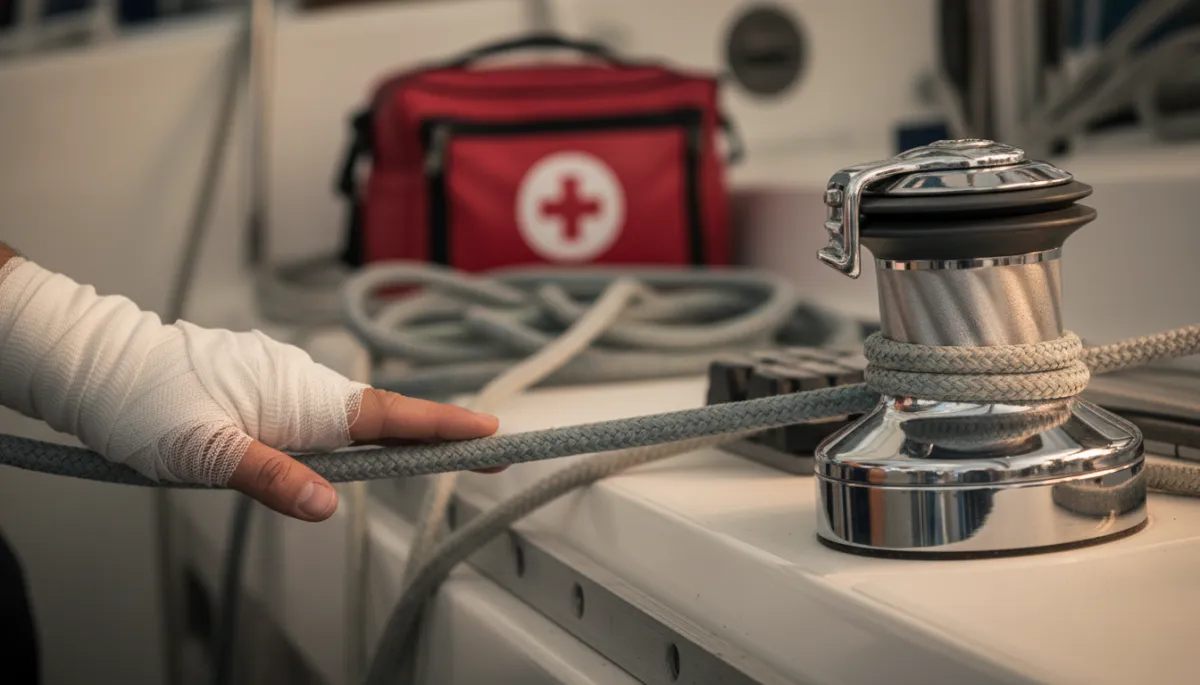
Even “minor” rope burns can limit grip and compromise safety for the entire crew.
Contamination and Infection: Salt, Grit and Rope Fibres in the Wound
Superyacht decks are far from sterile. Lines pick up salt, oil, carbon dust, paint flakes, and metal particles. When a rope burns through the skin, these contaminants can be literally rubbed into the wound. According to first‑aid guidance on friction burns (Mayo Clinic, WebMD), this significantly increases the risk of:
Local infection (redness, warmth, swelling, pus)
Delayed healing and increased scarring
Systemic infection in severe cases, especially if first aid is delayed
Saltwater itself can sting and dry out damaged skin, but it does not clean a wound adequately. Proper washing with clean, fresh water is essential once the immediate danger on deck has passed.
First Aid for Rope Burns at Sea: Step‑by‑Step
Current first‑aid recommendations for rope burns and friction burns (Healthline, WebMD, Mayo Clinic) outline a clear sequence that can be adapted for the superyacht environment:
Stop the cause and assess safety. Secure the line, step clear of winches and moving gear, and remove the injured crew member from immediate danger.
Cool the burn. Run cool, not cold fresh water over the area, or apply a cool, damp clean cloth for 10–20 minutes to reduce pain and swelling. Do not use ice directly, as it can further damage the tissue.
Clean gently. Wash around the wound with mild soap and clean water, flushing away visible debris. Avoid scrubbing the raw area, which can deepen the injury.
Protect the wound. Cover with a sterile, non‑adhesive dressing or a clean, lint‑free cloth. On hands, secure it so the crew member can still move fingers without the dressing rubbing off.
Avoid trapping heat. Immediately after the burn, skip heavy ointments, butter, or thick creams that can hold heat in. Once the skin has cooled, a light antibiotic ointment may be used if advised by your medical protocol to reduce infection risk.
Manage pain. Over‑the‑counter pain relief such as ibuprofen or paracetamol (if not contraindicated) can help keep the crew member comfortable and functional.
⚠️ Warning: Rope burns over joints, large areas, or with deep blistering should be treated as significant burns and escalated to professional medical care as soon as possible.
When to Call the Doctor — and Why It Matters
In the rush of a regatta, it is tempting to tape it up and get back on the rail. However, medical sources agree that you should seek professional advice if:
The burn is deep, blistered, or larger than the palm of the hand.
It crosses a joint or multiple fingers, risking stiffness and loss of function.
There are signs of infection: increasing redness, warmth, swelling, throbbing pain, or pus.
The injured person has diabetes, poor circulation, or a compromised immune system.
On an offshore leg, this may mean consulting your tele‑medical provider or shore‑based doctor for specific instructions, including whether antibiotics or a change of dressing regime are needed. Early, informed decisions can prevent a simple rope burn from turning into days of pain, reduced performance, and possible long‑term scarring.
Hand Safety: Protecting the Crew, Protecting the Campaign
Superyacht racing safety guidelines consistently highlight hand protection as a priority (World Sailing, Superyacht Racing Association, Yachting World safety protocols). Practical measures include:
Wearing well‑fitting sailing gloves designed for high‑load rope work.
Training crew never to take wraps bare‑handed on loaded Dyneema or Kevlar lines.
Keeping hands clear of winches, blocks, and hydraulic systems during manoeuvres.
Regularly inspecting lines for glazing, flat spots, and broken fibres that increase friction and snag risk.
💡 Pro Tip: Build rope‑handling drills and first‑aid refreshers into pre‑regatta training so every crew member knows both how to avoid burns and how to treat them.
More Than a Nuisance: Taking Rope Burns Seriously
In the world of high‑performance superyacht racing, rope burns are predictable but not inevitable. They are a direct consequence of enormous loads, advanced fibres, and human hands in the middle. Treating them as minor annoyances underestimates their medical implications and their impact on safety and performance.
By respecting the power of Dyneema and Kevlar, enforcing robust hand safety practices, and applying prompt, evidence‑based first aid followed by appropriate medical consultation, captains and race crews can keep rope burns from becoming the injury that ends a regatta — or a season.
